


Maria Alp

Maria_photo


Freshwater Ecologist
RiverLy, EcoFlowS
Email : maria.alp at inrae.fr
ORCID ID : 0000-0003-4295-6361


Key research topics and activities

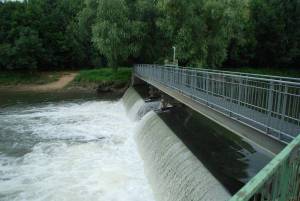
Barriere_Eure
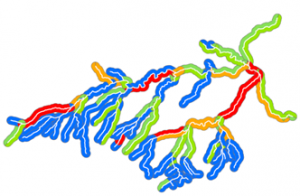
map
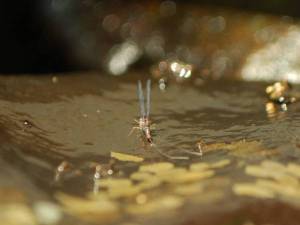
Baetis_laying_eggs_Germany_Harz_mountains

Animal dispersal and recruitment in stream networks

Human impact on streams

  • Hydropeaking effects on stream organisms
  • Effects of longitudinal and lateral connectivity interruption on stream populations
  • Stable isotope use in evaluating human impact on freshwater food webs

Restoration ecology: combining social and ecological goals  

  • Socio-ecological effects of river connectivity restoration
  • Participatory approaches to co-construction of restoration projects  https://rivive.es/
  • Knowledge transfer from research to practitioners

Student supervision

Doctoral theses

  • Anaelle Ghesquière, 2024-2027 (UMR G-Eau, Université de Montpellier) Activer et maintenir les citoyennetés ripariennes autour des rivières en cours de restauration.
  • Emmanuel Jaulin, 2022-2025 (Université Claude Bernard Lyon 1) Looking at the reproduction of stream insects to improve our understanding of the ecological effects of artificial flow variations (Université Lyon 1) https://theses.fr/2025LYO10065

Master students 

  • Elise Starck, 2026 (Université de Perpignan) : Les communautés des macro-invertébrés dans les rivières gérées par éclusées : analyse de traits (co-encadrement avec M.Logez).
  • Dimitri Ventura, 2025 (Université Jean Moulin Lyon III) De la controverse à l'« apaisement » : les jeux d’acteurs autour des éclusées de la rivière d’Ain (co-encadrement avec M.Cottet).
  • Alice Boutard, 2025 (Université Claude Bernard Lyon 1) : Effet des assèchements répétés sur l’éclosion des œufs des éphémères : Etude expérimentale sur le genre Baetis
  • Maya Kellow-Bingham, 2024 (Université Bourgogne-Franche-Comté). Mayfly egg resistance to artificially regulated river flows: effects of temperature and dewatering duration
  • Emmanuel Jaulin, 2021 (Université de Rennes I) From emergence to oviposition of mayflies: Description of the oviposition behaviour and assessment of dispersal distances.
  • Emilie Mauduit, 2019 (Université de Poitiers) Spatio-temporal patterns of mobility of resident river trout, Salmo trutta fario: combination of telemetric and genetic data.
  • Alexia Mustarda, 2018 (Université Claude Bernard Lyon I) Analyse de viabilité des populations: construction d’un modèle de dynamique de populations de truites dans un cours d’eau pyrénéen.

Other responsibilities

HYPEAK.jpg
  • Co-founder and board member of the international HyPeak network 
  • Member of the Scientific Committee of the Parc National de Forêts  and of the Réserve naturelle Marais de Lavours 
  • Reviewer for: Freshwater Biology, Aquatic Sciences, Aquatic Ecology, Freshwater Science, Hydrobiologia, Diversity and Distributions, The Biological Journal of the Linnean Society, Limnologica, Biotropica, Ecology, Molecular Ecology, PeerJ, Frontiers in Environmental Science, Journal of Applied Ecology, VertigO-la revue électronique en sciences de l'environnement
  • Project evaluation for the Czech Science Foundation

Peer-reviewed publications

  • Venus, T. E., Ola, O., Alp, M., Bätz, N., Bejarano, M. D., Boavida, I., Bruno, M.C., Casas-Mulet, R., Carolli, M., Chiogna, G., Gosselin, M.-P., Halleraker, J.H., Noack, M., Tonolla, D., Vanzo, D. & Hayes, D. S. (2025). The power of hydropeaking: Trade-offs between flexible hydropower and river ecosystem services in Europe. Ecological Economics233, 108583. https://doi.org/10.1016/j.ecolecon.2025.108583
  • Alp, M., Arnaud, F., Barthélémy, C., Bernez, I., Clemens, A., Cottet, M., Dufour, S., Germaine, M.-A. Gramaglia, C., Grivel, S., Le Pichon, C., Lespez, L., Lusson, M., Navratil, O., Piégay, H., Prunier, J.G., Rollet, A.-J., Tales, E., Lamouroux, N. (2024). Restaurer la continuité écologique des cours d’eau : que sait-on et comment passer collectivement à l’action ? VertigO-la revue électronique en sciences de l'environnement, 24(2). https://doi.org/10.4000/12ppa
  • Boncourt, E., Bergès, L., Alp, M., Dupont, B., Herviault, T., & Evette, A. (2024). Riparian habitat connectivity restoration in an anthropized landscape: A multi-species approach based on landscape graph and soil bioengineering structures, Environmental Management, 1-18. https://doi.org/10.1007/s00267-024-01959-5
  • Boncourt E., Evette, A., Bergès, L., Alp, M. (2024). Le génie végétal au secours de la connectivité écologique des berges de cours d’eau en milieu urbain. Sciences Eaux & Territoires, (46), 8072. https://doi.org/10.20870/Revue-SET.2024.46.8072.
  • Hayes, D.S., Bruno, M.C, Alp, M., Boavida, I., Batalla, R.J., Bejarano, M.D., Noack, M., Vanzo, D., Casas-Mulet, R., Vericat, D., Carolli, M., Tonolla, D., Halleraker, J.H., Gosselin, M-P., Chiogna, G., Zolezzi, G., Venus, T.E. (2023). 100 key questions to guide hydropeaking research and policy, Renewable & Sustainable Energy Reviews, 187, 113729. https://doi.org/10.1016/j.rser.2023.113729
  • Alp, M., Batalla, R.J., Bejarano, M.D., Boavida, I., Capra, H., Carolli, M., Casas-Mulet, R., Costa, M. J., Halleraker, J.H., Hauer, C., Hayes, D.S., Harby, A., Noack, M., Palau, A., Schneider, M., Schönfelder, L., Tonolla, D., Vanzo, D., Venus, T., Vericat, D., Zolezzi, G., & Bruno, M.C. (2022). Introducing HyPeak: An international network on hydropeaking research, practice, and policy. River Research and Applications, 1– 9. https://doi.org/10.1002/rra.3996
  • Alp, M., & Cucherousset, J. (2021). Food webs speak of human impact: Using stable isotope-based tools to measure ecological consequences of environmental change. Food Webs, e00218. https://doi.org/10.1016/j.fooweb.2021.e00218
  • Downes, B. J., Peckarsky, B. L., Lancaster, J., Bovill, W. D., & Alp, M. (2021). From insects to frogs, egg–juvenile recruitment can have persistent effects on population sizes. Annual Review of Ecology, Evolution, and Systematics, 52https://www.annualreviews.org/doi/abs/10.1146/annurev-ecolsys-122420-102909
  • Sarremejane, R., Cid Puey, N., Datry, T., Stubbington, R., Alp, M., Cañedo-Arguelles, Cordero-Rivera, M.A., Csabai, Z., Gutierrez Canovas, C., Heino, J., Forcellini, M., Millan, A., Paillex, A., Paril, P., Polasek, M., Tierno de Figueroa, J.M., Usseglio-Polatera, P., Zamora-Muñoz, C., Bonada, N. (2020) DISPERSE: A trait database to assess the dispersal potential of aquatic macroinvertebrates. https://www.biorxiv.org/content/10.1101/2020.02.21.953737v1
  • Alp, M., Le Pichon C. (2020) Getting from sea to nurseries: considering tidal dynamics of juvenile habitat distribution and connectivity in a highly-modified estuarine riverscape. Ecosystems. https://doi.org/10.1007/s10021-020-00536-1
  • Alp, M., Cucherousset, J., Buoro, M., Lecerf, A. (2016) Phenological response of a key ecosystem function to biological invasion. Ecology Letters, 19(5), 519-527. https://doi.org/10.1111/ele.12585
  • Kaboré I., O. Moog, M. Alp, W. Guenda, T. Koblinger, K. Mano, A. Ouéda, Ouédraogo R., D. Trauner and A.H. Melcher. (2016) Using macro-invertebrates for ecosystem health assessment in semi-arid streams of Burkina Faso. Hydrobiologia, 766(1), 57-74. https://doi.org/10.1007/s10750-015-2443-6
  • Larsen S. & Alp M. (2015) Ecological thresholds and riparian wetlands: an overview for environmental managers. Limnology, 16 (1), 1-9. https://doi.org/10.1007/s10201-014-0436-1
  • Pauls, S.U., Alp, M.,  Balint, M., Bernabo, P., Čiampor, F., Čiamporová-Zaťovičová,Z., Finn, D., Kohout, J., Leese, F., Lencioni, V., Paz-Vinas, I. &  Monaghan, M.T. (2014) Integrating molecular tools into freshwater ecology: developments and opportunities. Freshwater Biology, 59: 1559–1576. https://doi.org/10.1111/fwb.12381
  • Alp M., Peckarsky, B.L., Bernasconi, S.M., Robinson C.T. (2013) Shifts in isotopic signatures of animals with complex life-cycles can complicate conclusions on cross-boundary trophic links. Aquatic Sciences, 75(4): 595-606. https://doi.org/10.1007/s00027-013-0303-x
  • Alp, M., Indermaur, L., Robinson, C.T. (2013) Environmental constraints on oviposition of aquatic invertebrates with contrasting life cycles in two human-modified streams. Freshwater Biology, 58: 1932-1945. https://doi.org/10.1111/fwb.12181
  • Alp M., Westram A.M., Keller, I., Robinson C.T. (2012): How river structure and biological traits influence gene flow: a population genetic study on two stream invertebrates with differing dispersal capacity. Freshwater Biology, 57 (5), 969-981. https://doi.org/10.1111/j.1365-2427.2012.02758.x
  • Gostner W., Alp M., Schleiss A., Robinson C.T. (2012): A new hydro-morphological index of diversity for assessing the physical potential for river health. Hydrobiologia, 712(1): 43-60. https://doi.org/10.1007/s10750-012-1288-5
  • Alp M. (2011) Integrating terrestrial stages of aquatic insects into studies of dispersal and recruitment in streams. PhD Thesis, ETH Zurich. https://www.research-collection.ethz.ch/handle/20.500.11850/153323
  • Jaulin Gautronneau, E., Azougui, A., Callu, A., Capra, H., Logez, M., Pella, H., Alp, M. (2026). Exposure to short dry phases prevents hatching of mayfly egg masses." Freshwater Biology, 71 (2): e70178. https://doi.org/10.1111/fwb.70178 

Reports and publications without peer-review process (in German/French)

  • Boncourt, E., Rihouey, E., Alp, M., Forcellini, M., Launay, B., Evette A., Bergès, L. (2025) Techniques de génie végétal en environnement fortement urbanisé : limiter les impacts sur la connectivité fonctionnelle des ripisylves pour les insectes aquatiques (Rapport final du projet GéniTrame 2, AE RMC)
  • Alp, M.,  Jaulin, E., Disdier, U., Sandquist, H., Datry, T., Forcellini, M., Launay, B., Floury, M., Simon, L ., Dolédec, S. (2023) Estimation des distances de dispersion effective des insectes en cours d’eau par l’analyse moléculaire et isotopique de leurs œufs (Rapport final du projet DispEff, ZABR).
  • Gramaglia, C., Picard, E., Morardet, S., Alp, M., Maurines, B., Navratil, O., Grivolas-Bauge, O., Lusson, M. (2023) Restau’Débat : Outils et méthodes pour l’animation de débats sur la restauration des rivières (Rapport final du projet Restau’Débat, ZABR).
  • Le Pichon C., Alp, M. (2018) Projet ANACONDHA « Analyse spatiale de la connectivité des habitats fonctionnels pour les poissons à l’échelle de l’estuaire ». Rapport de recherche du programme Seine Aval 5. https://www.seine-aval.fr/projet/anacondha/
  • Alp M., Karpati T., Werth S., Gostner W., Scheidegger C., Peter A. (2011): Erhaltung und Förderung der Biodiversität von Fliessgewässern. Wasser, Energie, Luft, 103 (3), 216-223. https://issuu.com/swv_wel/docs/wel_3_2011?backgroundColor=%2523222222
  • Werth, S., Weibel, D., Alp, M., Junker, J., Karpati, T., Peter, A. & Scheidegger, C. (2011) Lebensraumverbund Fliessgewässer: Die Bedeutung der Vernetzung. Wasser, Energie, Luft, 103 (3), 224-234. https://issuu.com/swv_wel/docs/wel_3_2011?backgroundColor=%2523222222
  • Recueil des fiches sur l’aménagement et l’écologie des cours d’eau (2012) Office fédéral de l’environnement OFEV, Berne, Suisse (FRA) / Merkblatt-Sammlung Wasserbau und Ökologie, Bundesamt für Umwelt BAFU, Bern, Schweiz (DE).
  • Werth, S., Alp, M., Karpati, T., Gostner W., Scheidegger, C., Peter, A. (2012) Fiche 2: Biodiversität in Fliessgewässern / Merkblatt 2: Biodiversité dans les cours d’eau.
  • Werth, S., Alp, M., Junker, J., Karpati, T., Weibel D., Peter, A., Scheidegger, C. (2012): Fiche 4: Connectivité des cours d’eau / Merkblatt 4: Vernetzung von Fliessgewässern.